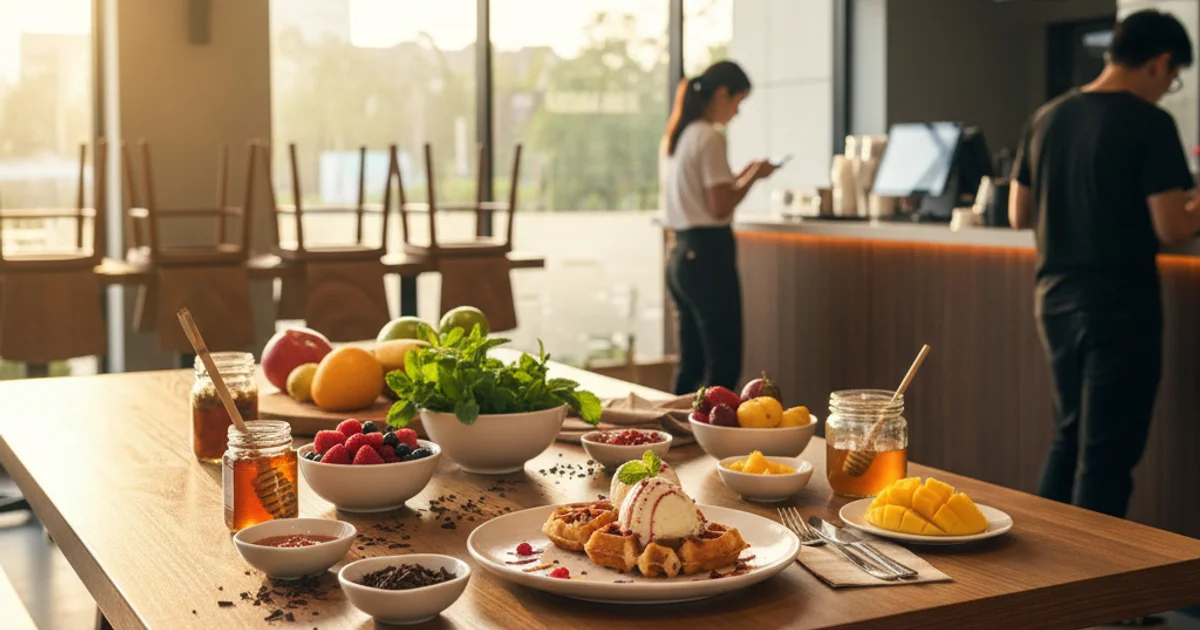
It's 3pm on a Tuesday in Toa Payoh, and the lunch crowd has cleared from the dessert shops around HDB Hub. The afternoon lull hits every day — empty tables, quiet registers, staff scrolling their phones. But three blocks away, CRÈME is buzzing with customers who just received a perfectly timed WhatsApp message about their new matcha series, complete with a limited-time 20% off coupon.
The difference? AI marketing that knows exactly when and how to reach customers.
For Toa Payoh's 10 dessert shops competing in one of Singapore's most established neighborhoods, artificial intelligence isn't just a buzzword — it's becoming the edge that separates thriving businesses from struggling ones. While traditional marketing blasts the same message to everyone, AI marketing learns each customer's preferences, predicts when they're most likely to visit, and delivers personalized experiences that feel handcrafted.
What AI Marketing Means for Toa Payoh Dessert Shops
AI marketing transforms how dessert shops connect with customers by analyzing behavior patterns, purchase history, and engagement data to create highly targeted campaigns. Instead of guessing what works, the technology tells you exactly which customers want your new ice cream flavors and when they're most likely to buy.
AI marketing uses machine learning to automate and optimize customer communications, from timing promotional messages to predicting which rewards will drive repeat visits.
The neighborhood context matters here. Toa Payoh draws both residents from the surrounding HDB flats and visitors attracted to the area's food scene. AI marketing helps dessert shops distinguish between these customer types and tailor approaches accordingly — perhaps sending family-friendly promotions to residents while highlighting Instagram-worthy desserts to younger visitors exploring the area.
Modern AI marketing platforms can track customer journeys across multiple touchpoints. When someone browses your menu online, visits your shop, and follows your Instagram, AI connects these interactions to build a complete picture. This comprehensive view enables dessert shops to send relevant messages that feel personal rather than generic.
Why Traditional Marketing Falls Short in Toa Payoh's Competitive Landscape
Broadcasting the same promotion to your entire customer list might have worked when Toa Payoh had fewer dessert options. Today, with established players like Creamier and newer entrants competing for attention, generic marketing gets ignored.
Traditional marketing treats all customers identically, while AI marketing recognizes that your regular afternoon customer has different preferences than your weekend family visitor.
The numbers tell the story. According to Mailchimp, marketing emails across industries see open rates around 35% but click rates of just 2.6%. Most customers delete promotional messages without engaging. In a dense market like Toa Payoh, this waste becomes expensive quickly.
Consider the timing challenge. Your 2pm regulars who grab dessert after lunch respond to different messages than evening customers looking for something sweet after dinner. Traditional marketing sends the same message to both groups at the same time, missing opportunities with each segment.
AI marketing solves this by learning individual customer patterns. It might send afternoon customers a "perfect after-lunch treat" message at 1:30pm while waiting until 7pm to remind evening visitors about your new dessert tasting menu.
How AI Learns Your Customers' Dessert Preferences
The real power of AI marketing lies in pattern recognition that would be impossible for humans to track manually. Every interaction — from which Instagram posts customers like to how long they spend reading your WhatsApp messages — becomes data that improves future communications.
AI marketing platforms analyze dozens of behavioral signals to predict what each customer wants to hear and when they want to hear it.
Take a customer who always orders ice cream on hot days but switches to warm desserts when it's cooler. AI notices this pattern and automatically adjusts promotional timing. On a 32-degree Tuesday, this customer gets an ice cream promotion. On a rainy evening, they see your hot chocolate soufflé special.
The learning extends beyond individual preferences to broader patterns. AI might discover that customers who try your signature items within their first three visits become long-term regulars, while those who don't often disappear. Armed with this insight, you can create targeted campaigns encouraging new customers to try your best desserts during that crucial early period.
Modern AI systems also understand seasonal and cultural patterns specific to Singapore. They learn that certain desserts perform better during Chinese New Year, that school holidays change customer timing, and that weekend family visits follow different patterns than weekday individual treats.
Timing Your Toa Payoh Marketing for Maximum Impact
Location-specific timing makes the difference between messages that convert and messages that get ignored. Toa Payoh's mix of office workers, residents, and visitors creates distinct daily patterns that AI can identify and leverage.
AI marketing identifies the optimal send times for each customer segment, maximizing engagement when people are most receptive to your message.
Morning commuters passing through Toa Payoh MRT might respond well to "grab-and-go" breakfast dessert promotions sent at 7:30am. Afternoon shoppers at HDB Hub could be perfect targets for 2pm messages about your new dessert combinations. Evening families might engage best with 6pm messages highlighting sharing platters and family-friendly options.
The data supports this approach. Infobip reports that WhatsApp Business messages achieve open rates near 98%, compared to around 20% for email. But timing still matters — even a 98% open rate means nothing if customers see your dessert promotion at 11pm when they're not thinking about treats.
AI learns these individual timing preferences automatically. It might discover that one customer always engages with messages sent on Tuesday afternoons, while another responds best to Thursday evening communications. This granular personalization would be impossible to manage manually across hundreds of customers.
Personalizing Dessert Recommendations Through Machine Learning
Generic recommendations feel impersonal in an age where customers expect businesses to understand their preferences. AI marketing enables dessert shops to make suggestions that feel curated specifically for each individual customer.
Machine learning algorithms analyze purchase history, browsing behavior, and engagement patterns to predict which desserts each customer will love most.
A customer who consistently orders matcha-flavored items gets personalized recommendations for your new matcha cheesecake before customers who prefer chocolate desserts. Someone who always adds extra toppings sees promotions for your premium customization options. Customers who visit with children receive family-friendly dessert suggestions.
This personalization extends beyond flavor preferences to understand broader behavioral patterns. AI might recognize that certain customers prefer trying new items while others stick to favorites, adjusting recommendation strategies accordingly. Adventure-seeking customers get early access to limited-edition flavors, while comfort-seekers receive reminders about their usual orders.
The technology also learns from indirect signals. A customer who spends time reading ingredient lists might appreciate detailed descriptions of your artisanal preparation methods. Someone who frequently shares photos of their desserts could be interested in your most photogenic new creations.
Measuring Success: AI Marketing Analytics for Dessert Shops
Traditional marketing often relies on vanity metrics that don't connect to actual business results. AI marketing provides detailed attribution that shows exactly which campaigns drive visits, purchases, and long-term customer value.
AI marketing platforms track the complete customer journey from initial message to repeat purchase, showing the true ROI of each campaign.
Instead of just knowing that 100 people opened your email, AI marketing tells you that 15 of those people visited within 24 hours, 8 made purchases, and 3 became regular customers. This level of detail enables data-driven decisions about which campaigns to expand and which to modify.
The analytics also reveal unexpected insights. You might discover that customers who receive dessert pairing suggestions spend 40% more per visit than those who get single-item promotions. Or that birthday month campaigns generate the highest lifetime value customers, even though they show lower immediate conversion rates.
Attribution tracking becomes particularly valuable in competitive markets like Toa Payoh. When multiple dessert shops are running promotions simultaneously, AI marketing helps you understand which of your campaigns actually influenced customer decisions versus which ones reached people already planning to visit.
Getting Started with AI Marketing in Toa Payoh
The barrier to entry for AI marketing has dropped significantly, making sophisticated customer intelligence accessible to independent dessert shops and small chains. Modern platforms handle the technical complexity while providing simple interfaces for campaign creation and management.
Start with customer segmentation based on visit frequency and spending patterns, then gradually add more sophisticated personalization as you collect more data.
Begin by connecting your existing customer data — loyalty program information, purchase history, and contact preferences. AI marketing platforms can immediately start identifying patterns and suggesting improvements to your current campaigns. Even basic segmentation often reveals surprising insights about customer behavior.
Focus initially on timing optimization and basic personalization. Let the AI determine the best times to reach different customer groups and begin tailoring messages based on past purchase behavior. These foundational improvements often generate immediate results that justify expanding into more advanced features.
Consider starting with WhatsApp marketing, given its exceptional engagement rates in Singapore. Meta reports that WhatsApp now serves over 3 billion monthly active users globally, and its business messaging features continue expanding. The platform's high engagement rates make it an ideal channel for testing AI-powered personalization.